
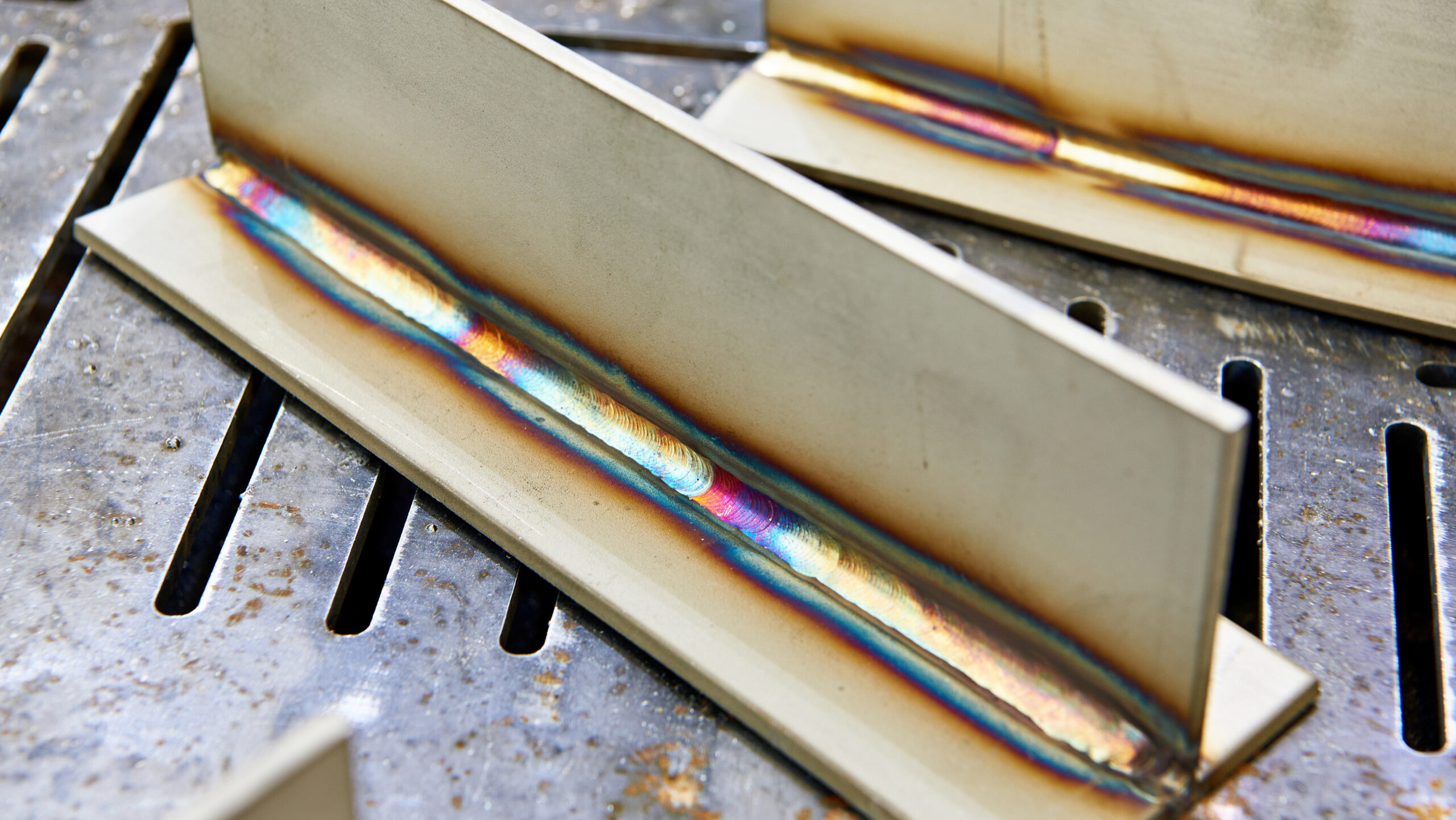
Calculate weld seams
Welded joints are indispensable in mechanical and plant engineering - and at the same time particularly relevant to safety. Their design determines whether a Design can withstand the high loads during operation or whether critical weak points occur.
In practice, it has been shown time and time again that manual calculations are error-prone and time-consuming. Those who rely on digital support here benefit from greater transparency and reliability - without unnecessarily complicating the design process.
Five key advantages of digital weld seam calculation
A fictitious practical example illustrates how companies can benefit if they systematically calculate their weld seams:
-
Full control and safety: digitally supported processes significantly reduce the risk of calculation errors - both for designers and for subsequent operation.
-
Speed and efficiency: Instead of time-consuming manual calculations, results can be achieved in the shortest possible time. This saves time and reduces sources of error.
-
Optimized dimensioning: Oversized weld seams are a thing of the past. Precise calculation means that material and resources are used in a targeted manner.
-
Current standards automatically integrated: Whether DVS, FKM or Eurocode 3 - a software-supported calculation ensures that work is always carried out according to the current state of the art.
-
Traceable documentation: Seamless evidence creates transparency with regard to internal quality processes and external requirements.


Project success
A medium-sized plant manufacturer was able to significantly reduce its development times and increase safety at the same time by using digital weld seam calculation. Instead of weeks, the design of critical joints now only took a few days. Oversized seams were replaced by precisely calculated geometries, which reduced the amount of material used by around 20%. At the same time, process reliability increased as all calculations were documented and validated in accordance with standards.
Conclusion
The example shows that a precise and software-supported weld seam calculation is not an additional expense, but a benefit for safety, efficiency and traceability. Designers receive clear results, save time and ensure that their connections meet the highest requirements.
👉 Further information: